
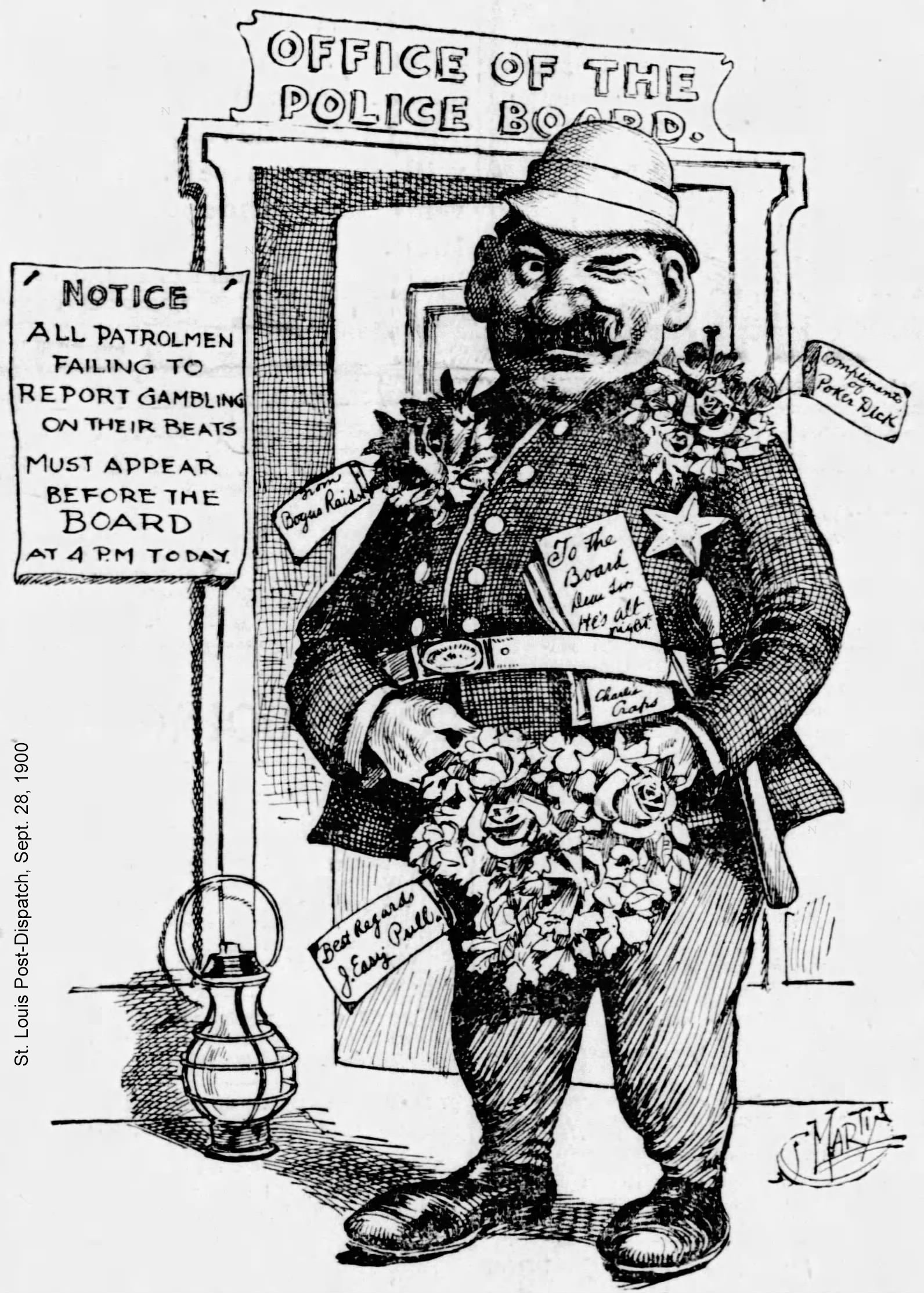
In 1900, after St. Louis Post-Dispatch reporters readily discovered “wholesale violations” of anti-gambling laws, including widespread use of illegal slot machines, the paper demanded answers from police.

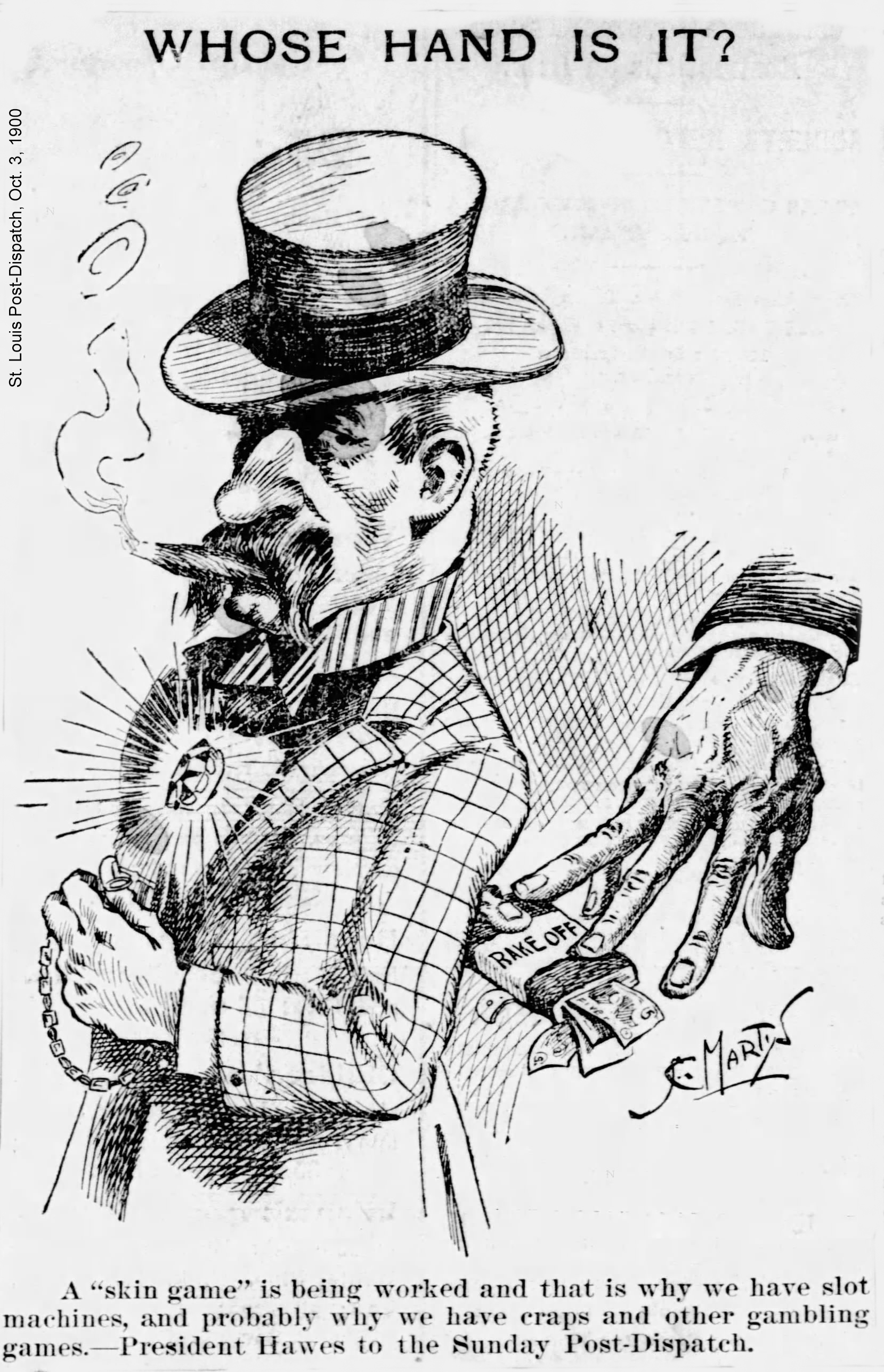
Harry B. Hawes, the 30-year-old president of the St. Louis Board of Police Commissioners, conceded the newspaper’s findings were correct, but claimed his hands were tied.
While Hawes “personally believed that slot machines were being operated in all places indicated by the recent exposures in the Post-Dispatch,” the police chief, John W. Campbell, had “repeatedly assured him that slot machines were not being run anywhere in St. Louis.”
Hawes suggested that some of the department’s men may be corrupt and that bribery – a “skin game” – explained the open operation of illegal slot machines in St. Louis. He said a person had offered him $3,000 a week “not to molest the operators of slot machines.” (The chief, too, had made similar claims to the paper – neither man named the person.)
Hawes was reappointed in 1901 to the police board by a new governor, Alexander Dockery; shortly after that board met, Campbell was replaced as chief by Mathew Kiely, a native of Ireland. Campbell stayed on with the force as a captain.
Under the new chief, St. Louis police raided the Southern Telegraph and Money Order Co., at 200 North Third, a gambling operation controlled by political boss “Colonel” Edward Butler. Police contended the business was organized to handle betting on horse races.
After repeated raids and newspaper coverage, Butler, his son John Butler and son-in-law John Parle sold their shares in the Southern Telegraph; Johnny Butler insisted it was just a telegraph company and that none of the money they invested was used for gambling.
“I still believe our business was perfectly legitimate,” young Butler told the Post-Dispatch in February 1902. Attorney Charles Noland, who bought the Southern Telegraph stock, said the notoriety resulting from the police crackdown caused the Butler wives to urge their husbands to quit the business.
It didn’t help that their Catholic priest also weighed in on the matter: “It will be recalled that Father Coffey, the pastor of the church of which the Butler family are members, openly denounced ‘Col.’ Butler from the pulpit recently and this ownership of the alleged poolrooms was one of the features upon which Father Coffey touched with vigor,” the Post-Dispatch reported on Feb. 6, 1902.
The Rev. James T. Coffey, who at the time led St. John Apostle and Evangelist (16th and Chestnut, now 15 Plaza Square), was an outspoken crusader against gambling and alcohol abuse – vices he tied to municipal corruption.
“Hoodlum politics are born of hoodlum politicians, and hoodlum politicians are the spawn of hoodlum hovels where the beer can and whisky bottle reign supreme,” Coffey thundered in a speech to the Christian Ministers’ Alliance in 1902.
Given that gambling is ubiquitous today – the state itself sanctions and promotes lotteries, casinos and now even sports betting – this 125-year-old flap about police (and politicians and courts) looking the other way seems quaint, except for the fact, illegal and unregulated video slot machines have spread across the state, protected by the same kind of “hoodlum politicians” that Father Coffey railed against.
Unlike 1900, though, there’s no crusading newspaper raising hell about it.
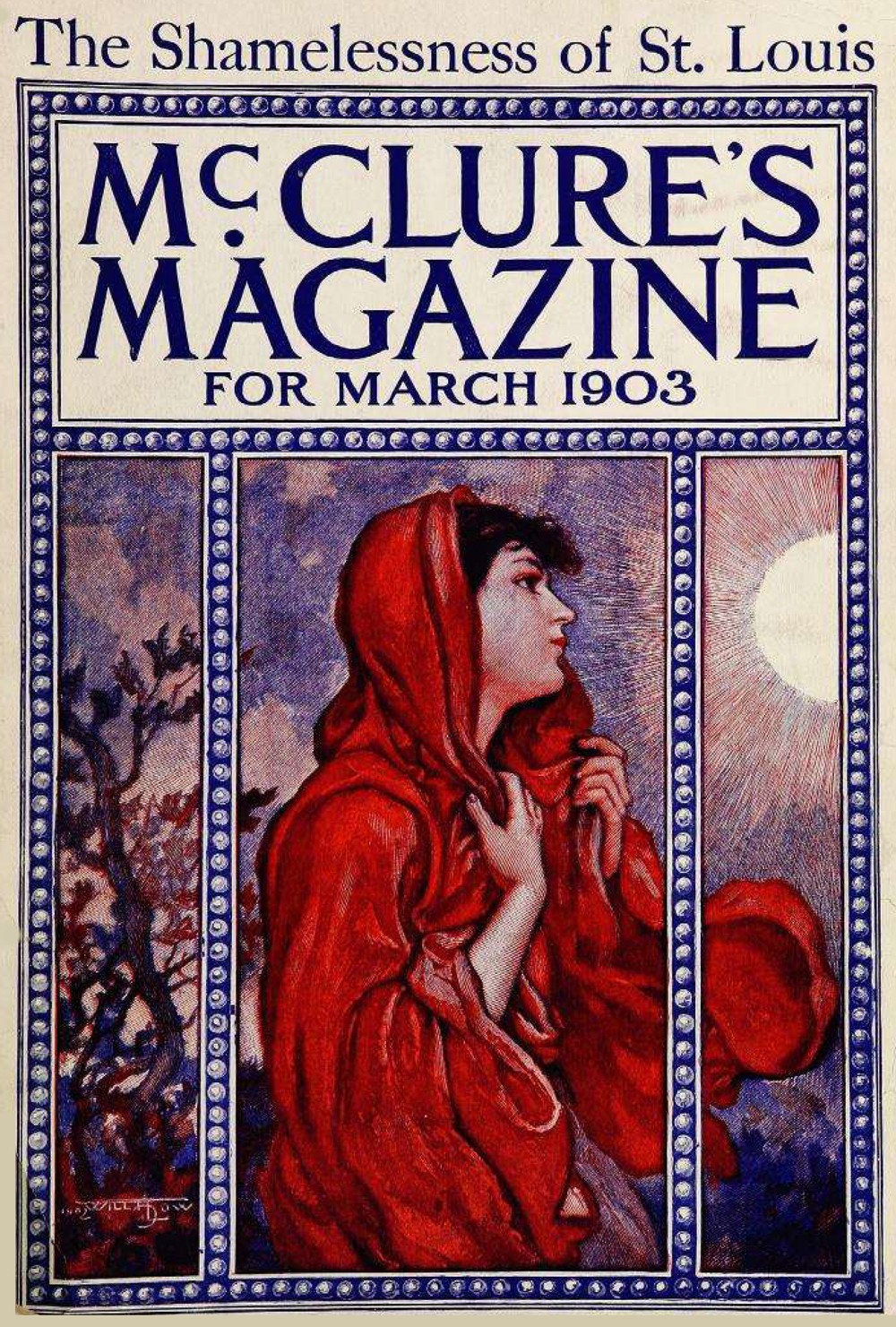
Coffey died in 1931, at age 69. Butler, whose corruption was highlighted by Lincoln Steffens’ “Shame of the Cities” series in McClure’s Magazine, died in bed in 1911, at 77. Hawes worked as an international lawyer, served in Congress and was an advocate for wildlife conservation. He died in 1947, also 77. — Roland Klose (Sept. 28, 2025)
_____
The curse is that we are ruled by the alliance of whisky and gambling; and the corruption bred by these noxious influences permeates our whole local government and our local politics.


 Roland Klose